English
 简体中文
简体中文 Русский
 Español
 ไทย
ไทย Tiếng Việt
 Bahasa Melayu
 Bahasa Indonesia
 لالعربية
 Deutsch
CIJ Printer Spare Parts: How to Tell OEM From Compatible Stock
Release time:
2026-10-06
CIJ printer spare parts buying guide: what fails first, which parts justify OEM prices, which suit compatible stock, and four questions to ask before ordering.
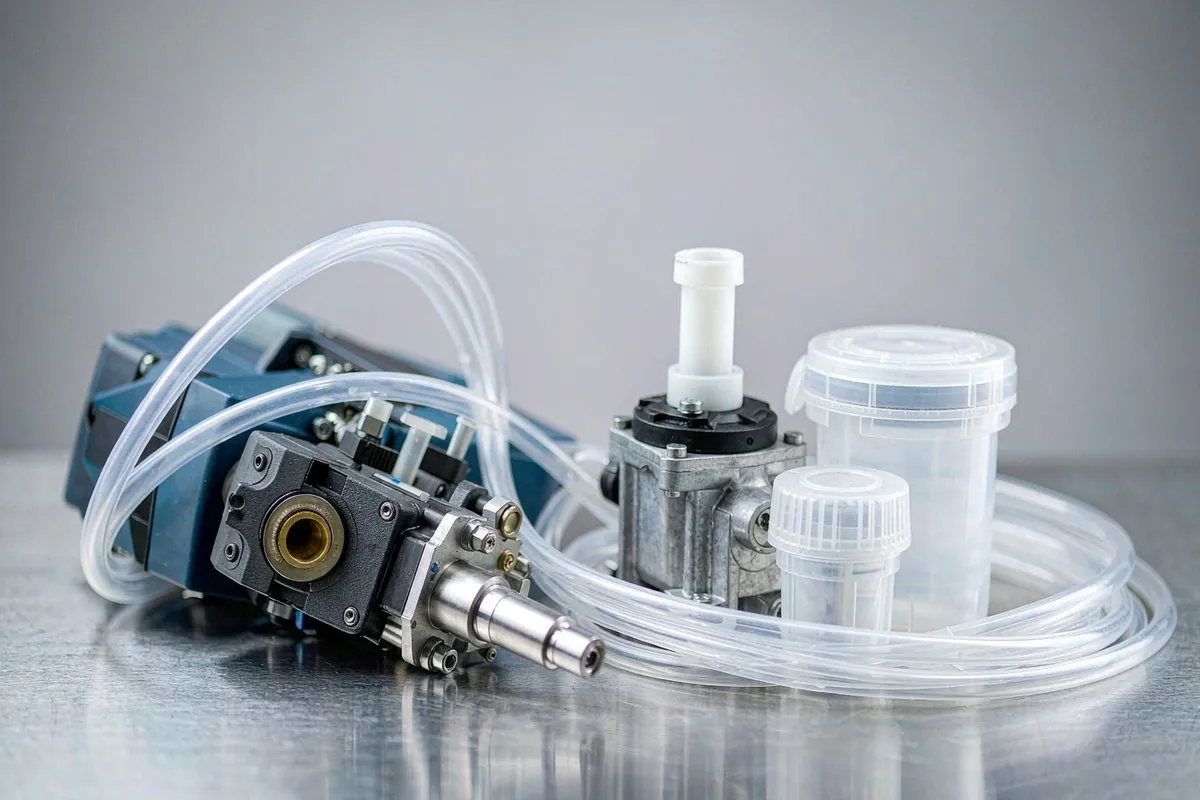
Summary: Most CIJ downtime comes from a short list of parts: filters, printheads, pumps, valves. This guide covers the real failure order, when genuine parts earn their price and when compatible stock makes sense, the four questions worth asking before an order, and how to hold spares without tying up cash.
Where a CIJ Line Actually Stops
Nobody calls about a whole machine. They call about one part: the printhead that will not clean up, the pump that lost pressure overnight, the filter housing nobody stocked.
So the spare parts question is not "who sells CIJ parts". It is which parts you can hold, which you must buy genuine, and who answers the phone on a Friday afternoon.
What Fails First, and How Often
Order of failure, in most plants I have walked through: filters and ink lines first, printhead and nozzle plate next, then pumps, then the solenoid valves and the umbilical.
Filters are the cheapest thing on the shelf and the one people skip. A clogged filter pushes the pump harder, the pump runs hot, and three weeks later you are buying a pump instead of a filter. Two spares per machine per year is not over-stocking.
OEM, Compatible, or Pulled
Three supply routes exist and they are not equal. OEM parts come with paperwork and a price. Compatible parts vary wildly: some are made to the same drawing, most are not. Pulled parts come off decommissioned machines and carry unknown hours.
Printheads and pumps reward genuine parts. Consumable-path items - filters, tubing, O-rings, gaskets, seals - do not. That is where compatible stock pays for itself, provided the material spec matches what the ink needs.
Pulled parts I would only accept for a machine headed for resale, never for one carrying production.
Four Questions Before You Order
What is the part number on the drawing, not the catalogue page. Is the material rated for the solvent you actually run. What is the shelf life of the seals, because rubber ages on the shelf too. And how does a warranty claim work if it fails inside a month.
Ask about the exchange route as well. A supplier who will take a suspect pump back for testing, rather than arguing by email for two weeks, is worth a premium.
Holding Stock Without Tying Up Cash
Build the list from your own failure history, not from a supplier's recommended kit. Twelve months of maintenance records will show you the eight items that matter.
Then hold those eight and nothing else. Keep seals in a dark drawer, keep filters sealed, and date everything you put on the shelf. Rotating stock you never use is just money sitting in a cupboard.
None of this is glamorous. It is the difference between a two-hour changeover and a two-day shutdown.
Related part reference: Linx 1240 solvent chip.
Related part reference: Markem-Imaje MB247 cartridge chip.
For more on CIJ TIJ consumables and compatible chips, browse our industry insights.
Related products:
related news


E-mail address:
Hotline:
All referenced brand names including Linx, Imaje, Domino, VJ are used solely for illustrating product compatibility scope.
Topmark has no affiliation, authorization, partnership or official endorsement with any industrial printer manufacturers.
All products offered by Topmark are third-party compatible consumables, not genuine original OEM spare parts.
No trademark ownership is claimed for any trademarks mentioned herein.