English
 简体中文
简体中文 Русский
 Español
 ไทย
ไทย Tiếng Việt
 Bahasa Melayu
 Bahasa Indonesia
 لالعربية
 Deutsch
Markem-Imaje Ink Chips: A Wholesale Sourcing Guide for B2B Buyers
Release time:
2026-10-06
Wholesale Markem-Imaje ink chips: how to tell a real stockist from a reseller, read batch codes, run a thirty-unit sample and contract the four failure modes.
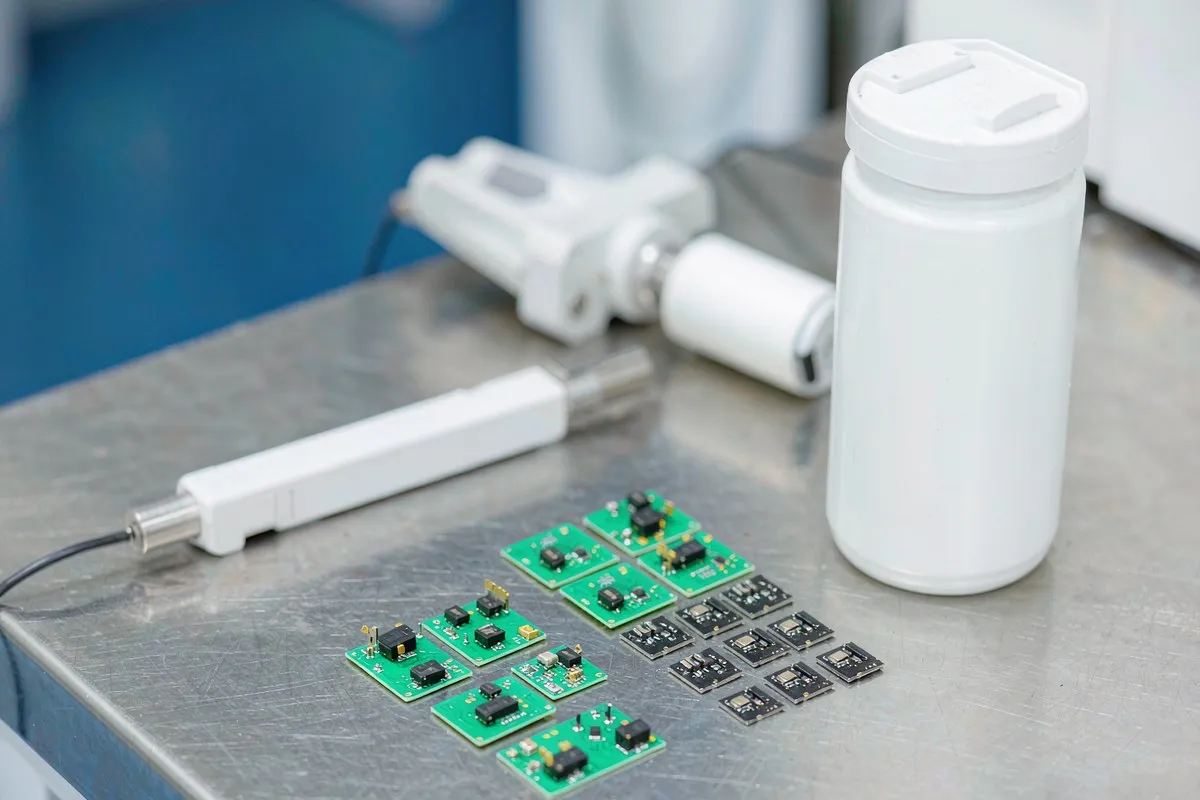
Summary: Wholesale Markem-Imaje ink chips are decided by programming quality, batch continuity and how a supplier handles a failed board, not by unit price. This guide covers the two board families that share one cartridge slot, batch code checks, MOQ and lead time reality, a thirty-unit sample run on your own machines, and the four failure modes worth writing into a supply agreement.
What the Ink Chip Actually Decides
The board inside a Markem-Imaje cartridge is not a consumable in the ordinary sense. It carries the cartridge identity, the volume counter, and on most of the newer platforms the shelf-life logic that decides whether the coder will accept a cartridge at all.
Buyers file it under accessories. Operators know better. Fill a cartridge with fluid that matches the spec, fit a board the firmware refuses to read, and you have scrap plastic on a stopped line at seven in the morning.
So the real sourcing question is not who quotes the lowest number. It is who can still supply boards that this firmware revision accepts three orders from now.
Two Boards Sit Behind One Imaje Cartridge
Most non-OEM stock splits into two families. The first is the standard ink cartridge chip, the one that appears across the 9020 and 9410 families and gets sold in the tens of thousands. The second covers the make-up and solvent side, plus the service modules that carry filter and pump lifetime data.
They are not interchangeable, and the part numbers do not forgive a guess. The same 1-litre cartridge can take one board in a 9410 service position and a different one on an A656 solvent slot, depending on the build the machine left the factory with.
Mixed fleets find this out the hard way. Two part numbers, one invoice line, and a weekend gone.
Batch Codes Are the Cheapest Due Diligence You Can Run
Ask for the batch code on every carton before you pay. Then ask what the previous three batches were.
A supplier who has those numbers in hand is running real inventory. The one who answers "we always ship fresh stock" is buying from whoever is cheapest that month, and you inherit the variance.
Batch continuity is worth more than most purchasing teams assume. Once operators have dialled in dry time and adhesion for a given ink on PET, a silent switch costs a shift of rejects and a meeting about why. Getting a batch number in writing, on request, is a service worth a few percent.
MOQ, Lead Time, and Who Programs the Board
Volume pricing on compatible boards usually breaks at three points: fifty units, two hundred, and a full carton. Under fifty you are mostly paying handling and air freight. Above two hundred the unit price flattens and the competition moves to terms and delivery.
Lead time is the column people leave off the comparison sheet. Ask for the time from purchase order to dispatch, not the time from "we have stock".
Then ask where the programming happens. In-house programming is the difference between a two-day turnaround and a three-week wait the next time a firmware revision lands. It also tells you who owns the problem when a batch fails at your site.
Run a Sample Before You Sign Anything
Order thirty units. Run them on your own machines, at your own line speeds, with your own operators fitting them.
Then do the boring part. Record the acceptance behaviour at start-up, the counter accuracy after a full cartridge, and the messages the panel throws when a board is pulled mid-run. Two or three per carton will not pass, with any supplier. Knowing how often tells you what to hold as spares.
Fit them the way the manual says, as well. Contact films handled with bare fingers and stored loose in a toolbox fail early, and nobody will cover that.
Failure Modes Worth Writing Into the Contract
Four show up again and again. Immediate rejection on first insertion, which is nearly always a programming issue and is the supplier's problem. Mid-cartridge rejection, which points at contact wear or a counter mismatch. Expiry locks triggered months early, which is a data problem on the board. And physical fit, where a board seats but will not latch.
Put a line in the agreement that covers the first three with replacement, and define how a failure gets documented. A photograph of the error code on the panel is enough. Refusing claims without a returned part is fair. Refusing claims that are photographed and timestamped is not.
A Checklist for the First Order
Model and firmware revision of every machine you intend to feed. Exact cartridge part numbers, ink and solvent listed separately. Batch codes of the last two orders, in writing. Programming location and turnaround. Replacement terms for the four failure modes above. Payment terms that keep at least one order in your favour until the sample has run.
Thirty units is a reasonable first order. Not fifty. The point is to test the supplier's documentation and their response, not to save four percent.
Questions Buyers Keep Asking
Will a compatible board affect the coder warranty? In most jurisdictions the machine warranty is not automatically void, but a claim connected to the board can be refused. Keep original cartridges for anything warranty-relevant.
How many should we hold? Two weeks of consumption plus a sealed carton from the batch you are currently running. That covers a firmware surprise without tying up capital.
Can one board type cover the whole fleet? Rarely. Ink slots and solvent slots diverge, and the firmware build matters more than the model plate.
Is the cheaper chip always the worse one? No. Programming quality and contact plating decide the outcome, which is why the sample run matters more than the quote.
Wholesale sourcing on this part rewards patience more than it rewards the lowest number. Get the firmware revisions down on paper, keep one batch you trust, and stay with the supplier who answers the awkward question about failed units in a sentence rather than a paragraph. That supplier is rarely the cheapest. Over a year it is almost always the cheaper one.
For more on CIJ TIJ consumables and compatible chips, browse our industry insights.
Related products:
related news


E-mail address:
Hotline:
All referenced brand names including Linx, Imaje, Domino, VJ are used solely for illustrating product compatibility scope.
Topmark has no affiliation, authorization, partnership or official endorsement with any industrial printer manufacturers.
All products offered by Topmark are third-party compatible consumables, not genuine original OEM spare parts.
No trademark ownership is claimed for any trademarks mentioned herein.