English
 简体中文
 Русский
 Español
 ไทย
 Tiếng Việt
 Bahasa Melayu
 Bahasa Indonesia
 لالعربية
 Deutsch

How to Reset a VJ Ink Cartridge Chip: Step-by-Step Buyer Guide
Release time:
2026-11-02
How to reset a VJ ink cartridge chip step by step: when resets work, five checks before blaming the chip, and why verified compatible chips cost less.
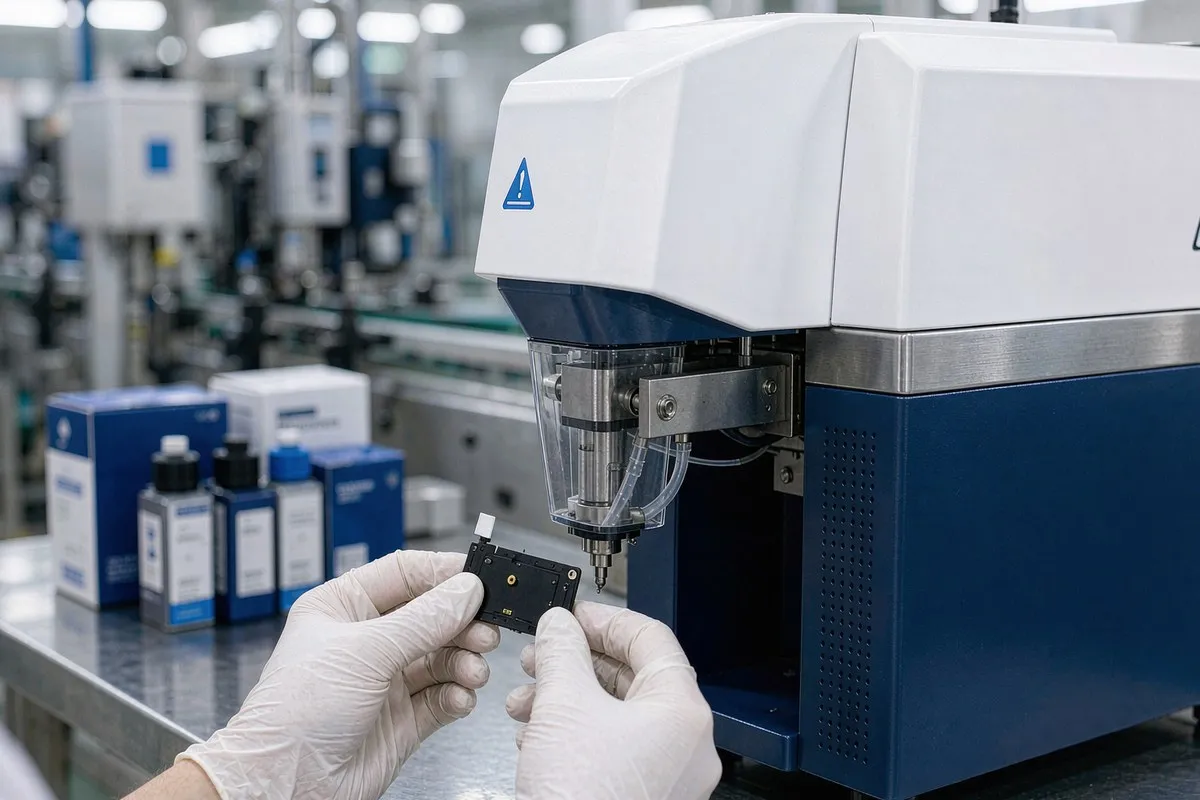
Summary: Resetting a VJ ink cartridge chip works only when the board is genuinely resettable, and half of all chip faults trace back to contacts, seating, firmware or date logic instead. This guide walks through the working reset sequence, the five checks worth making first, the real cost comparison between resets and compatible replacement chips, and the storage habits that keep fault rates near zero.
What the Ink Chip Actually Does
Every cartridge that goes into a CIJ or TIJ coder carries a small board that talks to the machine. It reports fluid type, batch, fill level and expiry. The printer refuses to run when the answer looks wrong - wrong fluid family, expired date, or a counter that says the tank is empty while it visibly is not. That refusal protects the print quality, but it also turns a consumable into a dependency, and anyone who has stood in front of a stalled line at 6 a.m. knows how that feels. The chip is not the enemy. Unverified consumable data is.
When a Reset Makes Sense - and When It Does Not
A reset is worth attempting in three situations. First, you refilled or topped up a tank yourself and the level sensor argument will not clear. Second, you swapped a cartridge into a second machine of the same family and the new host still sees stale data. Third, a supplier shipped you a chip that reads correctly on the bench but trips a date error on the floor, which usually means the internal clock drifted. What a reset will not do is revive a chip whose memory is locked by the OEM to a single use. If the board is write-once, no procedure short of a replacement gets you past the counter, and pretending otherwise wastes a shift.
How to Reset a VJ Ink Cartridge Chip: The Working Sequence
Power the coder down before you touch anything; hot-swapping is how controller boards die. Remove the cartridge, inspect the chip contacts for ink film or fibers, and clean them with a lint-free wipe and a drop of isopropyl alcohol. Reseat firmly - a chip that sits half a millimeter proud reads intermittently, which looks exactly like a fault. Power up, run the machine's own consumable recognition, and only then consider a reset tool. For most VJ users this means the service-level menu or a dedicated handheld reprogrammer matched to the chip generation. Write the correct fluid reference, batch and expiry, verify on screen, and print a test sample before releasing the line. The whole job takes ten minutes when the chip is genuinely resettable and zero minutes when it is not, so confirm resettable stock with your supplier in writing.
Five Checks Before You Blame the Chip
Most chip errors I get called out for are not chip errors. Check the contacts first - dried ink is the single most common cause. Check the cartridge seating; vibration walks cartridges loose on lines with poor mounts. Check firmware: a coder updated last quarter may reject chips validated for the previous version. Check the date logic, because some plants run clocks ahead for shift tests and forget. And check the fluid itself - a filled tank with the wrong make-up ratio can trigger recognition faults that mimic a dead chip. Five checks, five minutes, and half of the "failed chips" go back to work.
Reset or Replace: What Actually Costs Less
Resets look free and are not. A reprogramming session costs a technician's time, and a chip that has been reset twice in one cartridge lifetime tends to fail again mid-run - the second failure always arrives during your longest batch. Replacement compatible chips, bought by exact cartridge reference and validation date, cost a fraction of OEM boxes and arrive with consistent memory maps. In plants I have worked with, the break-even sits at roughly three resets per chip: beyond that, planned replacement with verified compatible stock beats every reset cycle on both uptime and accounting. Keep a reset tool for emergencies, but run the fleet on fresh chips.
Buying Compatible VJ Chips Without the Guesswork
The compatible market ranges from excellent to landfill, and the difference shows up in three details. Ask for the chip generation explicitly - a V4-series cartridge will not accept a board built for an older family, and vague listings hide this. Ask for the validation date, not just the production date; memory cells drift on shelves the same way batteries do. Ask what happens when a chip fails on your line: a supplier who replaces without argument has already tested their stock, and a supplier who argues has not. Our own chips-rfid-tags range is built around those three questions, which is why the same customers reorder for years. Price matters last; a cheap chip that stops a filler costs more than any genuine part ever will.
Storage Habits That Prevent Most Chip Faults
Chips die in storage more often than in printers. Heat flattens memory cells, so a box of cartridges on the radiator shelf is a box of future faults. Condensation corrodes contacts in damp warehouses - keep original antistatic sleeves until the moment of installation, and let cold shipments acclimatize before opening. Rotate stock by validation date and write the received date on every box; FIFO is not bureaucracy here, it is uptime. Plants that follow these three habits report chip fault rates close to zero, which makes the whole reset debate mostly academic.
FAQ
Can one reset tool cover every VJ generation? No. Chip families changed several times; match the tool to the cartridge reference or you risk writing a memory map the printer cannot read.
Does a reset void the machine warranty? Consumable recognition is a service matter, not a warranty line item in most regions, but confirm with your service contract before a technician visit - surprises there are expensive.
How do we verify a compatible chip before a production run? Bench-test recognition on one machine, print a full-shift sample, then roll out. Two hours of testing protects the whole week.
For more on CIJ TIJ consumables and compatible chips, browse our industry insights.
Related products:
related news


E-mail address:
Hotline:
All referenced brand names including Linx, Imaje, Domino, VJ are used solely for illustrating product compatibility scope.
Topmark has no affiliation, authorization, partnership or official endorsement with any industrial printer manufacturers.
All products offered by Topmark are third-party compatible consumables, not genuine original OEM spare parts.
No trademark ownership is claimed for any trademarks mentioned herein.