English
 简体中文
简体中文 Русский
 Español
 ไทย
ไทย Tiếng Việt
 Bahasa Melayu
 Bahasa Indonesia
 لالعربية
 Deutsch
Food Packaging Coding: Why Codes Fail on Wet, Cold and Greasy Lines
Release time:
2026-10-09
Why codes fail on food packaging: condensation on chilled trays, frozen surfaces, greasy films, and the order of checks that fixes it without slowing the line.
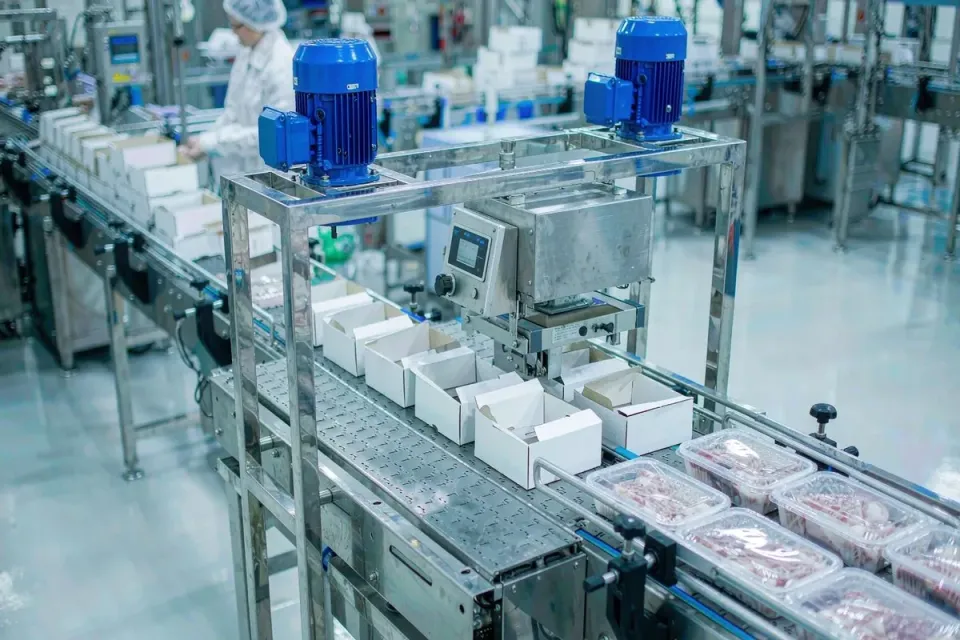
Summary: Codes on food packaging usually fail for two reasons: condensation and surface chemistry. This note covers what happens when a chilled tray meets a warm hall, why frozen surfaces will not hold ink, how release agents on film block adhesion, and the order of checks, head gap first and ink last, that clears most faults without slowing the line.
Codes Fail on Food Lines for Boring Reasons
Most of the marking problems I get called about on food lines are not printer faults. The coder is doing exactly what it was told. What changed is the surface it printed on, between the trial and the shift.
Two variables move more than anything else: moisture and temperature. Get either wrong and you get a code that looks fine under the inspection lamp and fails a rub test at the end of the conveyor.
Condensation Is the Real Enemy
A chilled tray pulled into a warm filling hall grows a film of water in seconds. Ink lands on that film instead of the pack. It sits there, dries on top of the water, and wipes off with a thumb.
The fix is rarely a new printer. Move the print head closer to the filler, cut the time between fill and print, and get air moving across the print station so the film never forms. On a VJ or DM line, a two-centimetre change in head position does more than any ink swap.
Cold Chain and Frozen Surfaces
Printing onto a deep-chilled or frozen surface is a substrate problem, not a settings problem. The ink gels before it keys into the material. You can push drop size and dwell time, but if the pack surface sits below the dew point of the hall, nothing will hold.
Either print before the chiller, or accept that this pack needs a label rather than an ink code.
Greasy and Coated Films
Fat and silicone release agents are the second common failure. They do exactly what they were designed to do, which is stop things sticking. Unfortunately that includes ink.
Ask your film supplier what release chemistry is on the surface, and get a coated sample you can run on the real line. Often a slightly different print window, or a solvent that bites a little harder, solves it.
Fixing It Without Slowing the Line
Work in this order: the gap between fill and print, the air movement in the hall, the film specification, and only then the ink and the chip in the cartridge. Changing ink first is the expensive way round.
Keep a log of which pack, which line and which shift the failures land on. Two weeks of that log will point at the single variable faster than any supplier visit.
For more on CIJ TIJ consumables and compatible chips, browse our industry insights.
Related products:
related news


E-mail address:
Hotline:
All referenced brand names including Linx, Imaje, Domino, VJ are used solely for illustrating product compatibility scope.
Topmark has no affiliation, authorization, partnership or official endorsement with any industrial printer manufacturers.
All products offered by Topmark are third-party compatible consumables, not genuine original OEM spare parts.
No trademark ownership is claimed for any trademarks mentioned herein.