English
 简体中文
简体中文 Русский
 Español
 ไทย
ไทย Tiếng Việt
 Bahasa Melayu
 Bahasa Indonesia
 لالعربية
 Deutsch
Cross-Region Inventory Allocation Reshapes CIJ Consumable Buying
Release time:
2026-09-02
Cross-region inventory allocation is changing how factories stock CIJ consumables, moving stock between regional warehouses to cut lead time and downtime.
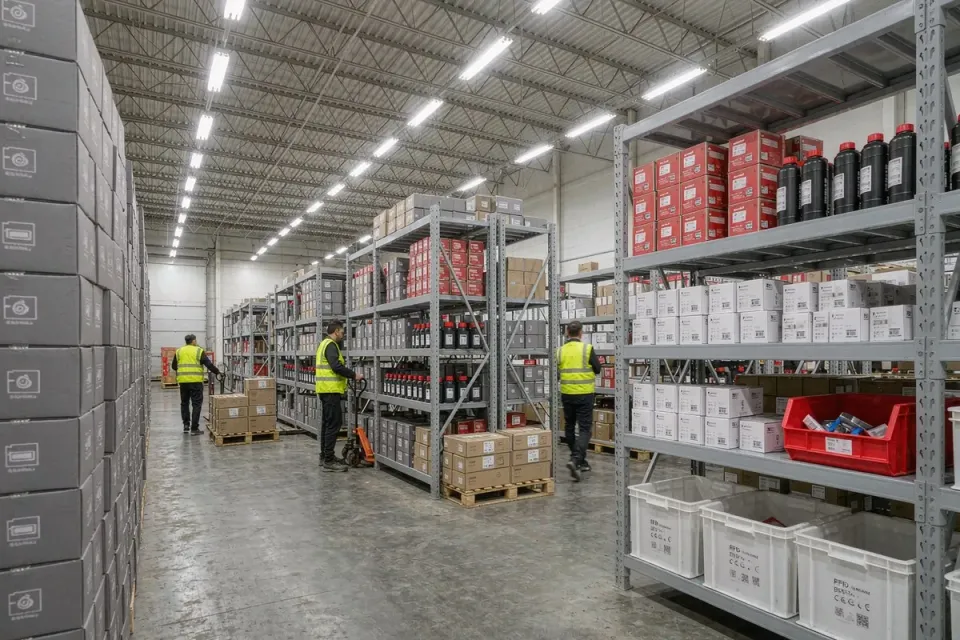
Summary: Cross-region inventory allocation is shortening lead times for CIJ consumables, as buyers pull compatible chips, ink and solvent from regional warehouses instead of waiting on ocean freight. This guide covers batch consistency across transfers, spec matching between warehouse locations and how to structure buffer stock.
When a factory in another time zone runs dry on ink or chips, the fastest fix is often not a new order but a transfer from a regional warehouse. Cross-region inventory allocation has quietly become the default answer for CIJ consumable shortages, and it changes how buyers think about compatible chips, solvent and spare fluid. The question is no longer whether stock exists, but which batch it comes from and whether it matches the machine.
Why Regional Transfers Beat Waiting on Freight
Ocean freight is cheap until your line stops. A pallet of compatible chips sitting in a warehouse three hundred kilometres away can be trucked in within two days; the same cartons on a vessel are three weeks out. Regional allocation trades a little paperwork for a lot of uptime.
What Moving Stock Between Regions Does to Batches
Every transfer splits a batch. Ink made in one production week can sit next to a different batch of solvent in another warehouse, and both may end up on the same machine. Batch consistency matters more than the label suggests: viscosity drift across production runs is normal, and mixing older and newer fluid without a check changes print behaviour. Chips are less temperamental, but recognition stability can still differ between firmware versions held in different regions.
Matching Consumables Across Warehouse Locations
A compatible ink that works in a humid plant does not always behave the same in a dry one. Cross-region stock means the same part number can come from different climate conditions, and CIJ fluid is sensitive to temperature swings in storage. Buyers should ask which warehouse holds the stock and how long it has been stored.
When Inventory Allocation Beats Local Buying
Local sourcing solves a shortage fast but prices it like a crisis. Regional allocation solves the same shortage at the rate you already agreed, because the stock was bought months ago under a supply contract. That is the real advantage: allocation is not procurement under pressure, it is logistics doing its job. RFID tags and coding chips ship flat and stable; ink and solvent are where the storage conditions start to matter.
How Buyers Should Structure Buffer Stock
Buffer stock works when someone owns the visibility. Set minimum levels per machine, not per warehouse, so the two platforms share the same safety margin. Confirm the supplier can segregate incoming batches by production date, and ask for a transfer record when stock moves regions. The machine prints what the consumables allow. Regional allocation only helps if the batch that arrives is the batch you specified.
For more on CIJ TIJ consumables and compatible chips, browse our industry insights.
Related products:
related news


E-mail address:
Hotline:
All referenced brand names including Linx, Imaje, Domino, VJ are used solely for illustrating product compatibility scope.
Topmark has no affiliation, authorization, partnership or official endorsement with any industrial printer manufacturers.
All products offered by Topmark are third-party compatible consumables, not genuine original OEM spare parts.
No trademark ownership is claimed for any trademarks mentioned herein.