English
 简体中文
 Русский
 Español
 ไทย
 Tiếng Việt
 Bahasa Melayu
 Bahasa Indonesia
 لالعربية
 Deutsch

Barcode Kennzeichnung auf Kupfer: What Works on the Shop Floor
Release time:
2026-10-27
Marking barcodes on bare copper? Why contrast and oxidation decide the method, where CIJ and TIJ each fit, and when DataMatrix beats a 1D code.
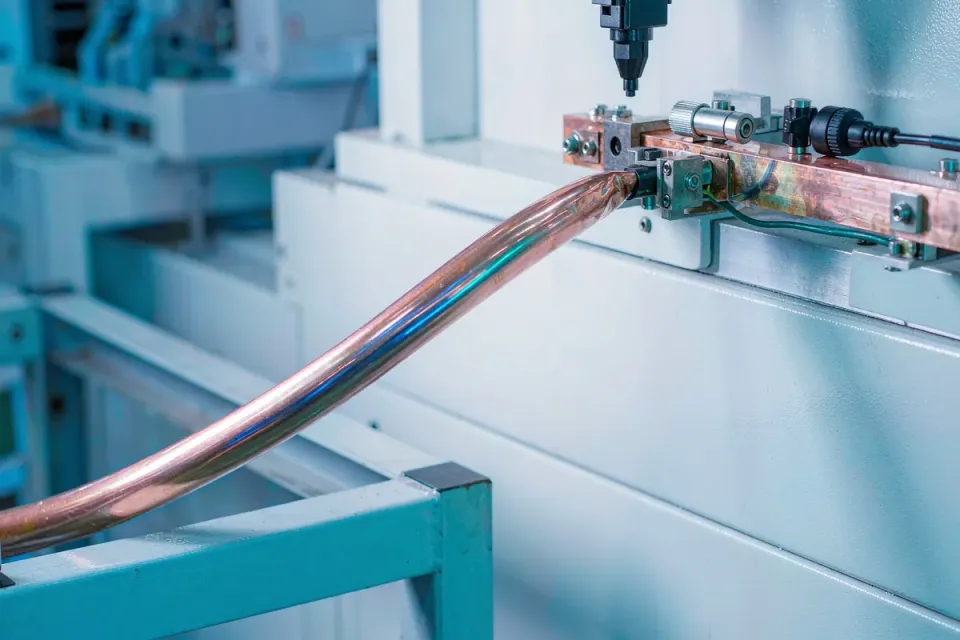
Summary: Copper reflects, oxidizes and curves, which makes barcode marking on copper a contrast problem before it is a printer problem. This guide compares CIJ and TIJ on bare copper, weighs 1D barcode against DataMatrix by surface and reading distance, and explains why the batch record behind your inks and chips decides whether the code still scans next month.
Why Copper Is a Difficult Surface to Mark
Copper fights back. It is reflective, it oxidizes within hours of cleaning, and every oxide layer changes how a code reads. Anyone who has chased a readable barcode kennzeichnung auf kupfer knows the pattern: the code scans beautifully in the morning and degrades by the afternoon shift as the surface darkens. Add cutting oils, handling marks and curved wire surfaces, and the marking method matters more on copper than on almost any other substrate a coder meets.
CIJ and TIJ: Where Each Fits
Continuous inkjet handles copper the way it handles most bare metals: small character, fast lines, ink formulated to bite into the surface. VJ and DM fleets running CIJ on cable and wire lines rely on exactly this pairing. TIJ earns its place where the code is larger or the line runs slower - data matrix codes on copper busbars and electronic components print cleanly with the right cartridge. Neither technology is "better"; the line speed and code size pick the winner before any brand comparison starts.
One-Dimensional Barcode or DataMatrix
A 1D barcode needs width; a DataMatrix needs contrast and quiet zones. On narrow wire or tight copper pads, the 2D code wins on space, which is why datamatrix auf kupfer has become the default across electronics. On wider copper strip or packaged cable drums, a classic barcode still reads faster at distance. French buyers searching datamatrix cuivre and German plants asking for chargennummer kennzeichnung industriell are really asking one question: how much data, on how much surface, at what reading distance. Answer those three and the symbology chooses itself.
Contrast, Oxidation and the Batch Record
The practical battle is contrast over time. Dark inks sit well on bright copper but lose the advantage as oxide builds; some plants print after a light abrasion step, others choose ink grades rated for oxidizing surfaces. Whatever you pick, log it: batch numbers, ink grade, printhead settings. That record is what an auditor asks for first, and it is also how you notice that recognition faults trace back to consumables rather than mechanics - a disciplined chips and consumables ledger turns a mystery fault into a five-minute lookup.
FAQ
Does CIJ ink damage copper contacts? Standard grades print on the surface without etching; for contact points, confirm the ink spec against your plating before running production.
Can one coder cover copper, plastic and labels on the same line? Usually yes. VJ and DM platforms switch grades or cartridges between surfaces, and our chips pool stocks validated chips across those cartridge families so the changeover does not stall on recognition.
For more on CIJ TIJ consumables and compatible chips, browse our industry insights.
Related products:
related news


E-mail address:
Hotline:
All referenced brand names including Linx, Imaje, Domino, VJ are used solely for illustrating product compatibility scope.
Topmark has no affiliation, authorization, partnership or official endorsement with any industrial printer manufacturers.
All products offered by Topmark are third-party compatible consumables, not genuine original OEM spare parts.
No trademark ownership is claimed for any trademarks mentioned herein.