English
 简体中文
 Русский
 Español
 ไทย
 Tiếng Việt
 Bahasa Melayu
 Bahasa Indonesia
 لالعربية
 Deutsch

Codificacion Latas: Date Codes That Survive Condensation and Speed
Release time:
2026-10-20
Coding on cans fails for three reasons: condensation, curved walls, and line speed. Fix ink choice, printhead distance, and timing to stop smudged codes.
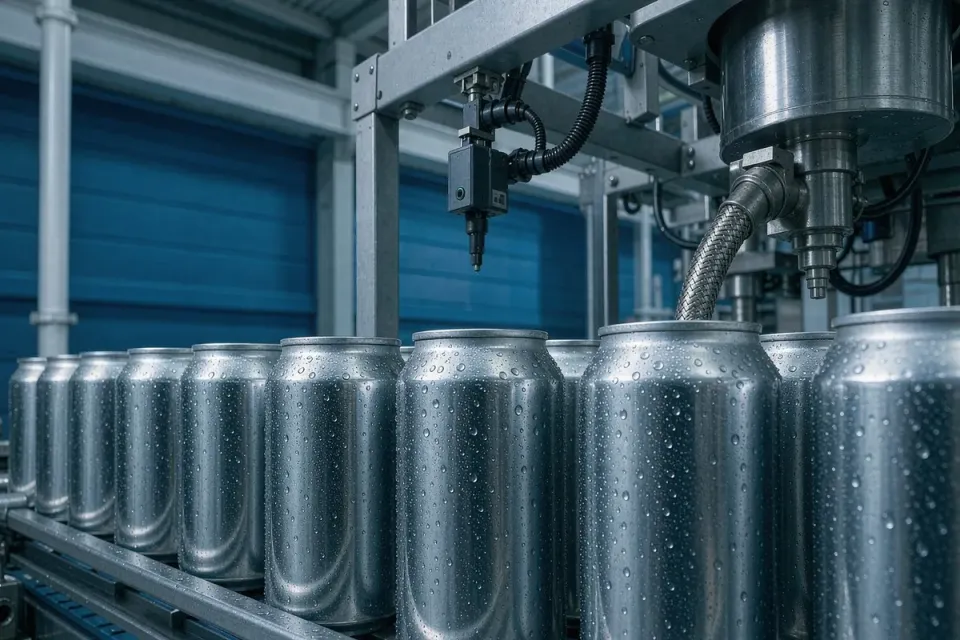
Summary: Codificacion latas fails for mechanical reasons more than chemical ones: condensation on the can wall, ink grades never validated on metal, drifting printhead distance, and sloppy encoder timing. Verify codes on wet production cans at line speed, and confirm cartridge chip compatibility before the season peak.
Condensation Beats Ink Before the Line Even Starts
Cans come off a filler cold and wet, and ink that lands on a film of water never bonds to metal. The fix starts upstream: blow-off air knives positioned before the coder, enough dwell for the surface to dry, and a print trigger that fires only when the can is actually ready. Half the smudged can codes I have audited were an airflow problem wearing an ink costume.
Match the Ink to the Can, Not the Catalogue
Aluminum accepts some ink families and shrugs off others. Lacquered cans, bare aluminum, and polymer-coated ends each behave differently, and a grade that dries beautifully on cartons can smear all day on a chilled can wall. Ask your supplier for an ink specified for metal and condensation, then verify it on production cans rather than sample sheets.
Distance and Speed Move Together
A CIJ printhead wants a tight, stable throw distance. On can lines the distance drifts as guide rails wear, and the code goes soft at the edges long before it becomes unreadable. Check the head-to-can gap at every changeover and lock the setup into the format change checklist so it survives staff rotation.
Timing and Encoder Discipline
A code that stretches or compresses along the print is an encoder or timing problem, not an ink problem. Confirm the encoder wheel is clean, gripping, and counting honestly, and take print triggers from a conveyor section where line speed is constant. Guessing the trigger point shows up later as codes that start halfway onto the can wall.
Verify on a Wet Can, Not a Test Sheet
Acceptance testing belongs on the line, with cold wet cans at full speed. Print a full shift's sample, wipe-test a portion, and grade legibility at line speed rather than at inspection-bench pace. Whether the plant runs a VJ, a DM, or another make of coder, the consumable side — ink grade and cartridge chip compatibility — decides more rejected can codes than the machine badge does.
For more on CIJ TIJ consumables and compatible chips, browse our industry insights.
Related products:
related news


E-mail address:
Hotline:
All referenced brand names including Linx, Imaje, Domino, VJ are used solely for illustrating product compatibility scope.
Topmark has no affiliation, authorization, partnership or official endorsement with any industrial printer manufacturers.
All products offered by Topmark are third-party compatible consumables, not genuine original OEM spare parts.
No trademark ownership is claimed for any trademarks mentioned herein.