English
 简体中文
简体中文 Русский
 Español
 ไทย
ไทย Tiếng Việt
 Bahasa Melayu
 Bahasa Indonesia
 لالعربية
 Deutsch
Food and Beverage Coding Equipment: What Plants Actually Buy
Release time:
2026-09-22
Food and beverage lines buy coding equipment for uptime, not brochures. What matters: washdown survival, consumable supply, and chips that read on a wet line.
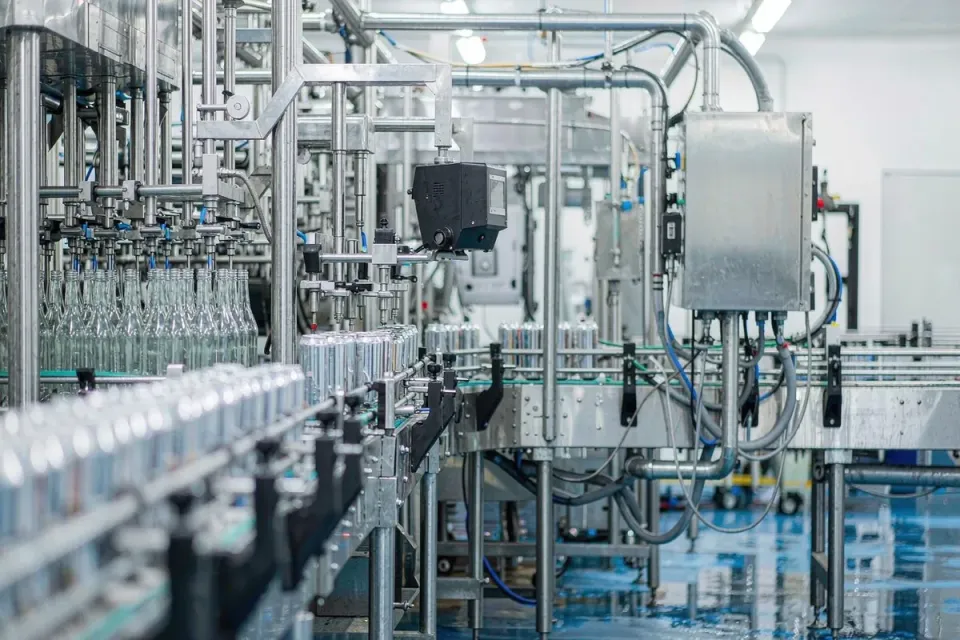
Summary: Food and beverage lines judge coding equipment by washdown survival and consumable supply, not brochure speed. DOD, CIJ and TIJ each do a different job on the same plant floor, and the spares and proprietary parts behind them decide what the machine really costs per year.
Food and beverage plants do not buy coding equipment the way other industries do. There is no long specification review and no three-month pilot. A line goes in, and either the coder survives the washdown shift or it does not.
That is why the food and beverages coding and marking equipment market behaves differently from the general equipment market. Downtime is measured in spoiled batches, not in lost hours.
What F&B Lines Actually Punish
Three things, in the order they end a trial: water, temperature swing, and speed. Brochure specifications rarely mention all three in the same paragraph.
A coder that prints beautifully on a dry carton in a showroom can fail on the first refrigerated line simply because condensation settles on the printhead overnight and nobody noticed until the morning shift started printing smudged dates.
Washdown and Humidity Retire More Coders Than Speed Does
Daily washdown between shifts puts water where the cabinet seal was never designed to see it. Stainless housings are standard on food-grade units for exactly that reason, and the price difference is not cosmetic.
Consumable Supply Is the Real Cost Line
Every line carries a monthly ink and solvent bill, and most plants work out eventually that the supply chain behind it matters more than the purchase price of the machine. Cartridge chips and make-up fluid get bought for as long as the machine runs. A supplier who cannot confirm firmware compatibility in writing is a monthly problem rather than a one-off.
DOD, CIJ and TIJ Do Different Jobs
A food plant usually runs more than one coding technology. CIJ handles fast lines and curved surfaces. TIJ suits cartons and cases. Large-character DOD units mark shipping cases where a big legible code matters more than resolution.
The trap is assuming a dod printer supplier can be judged the same way as a CIJ consumable supplier. They cannot. The questions are different and the spares you keep on the shelf are different.
What to Ask Before You Sign
Which consumables are proprietary and which are available as compatible chips? How fast can a printhead be changed mid-shift? What does a C5056A printhead cost, and how many do comparable plants get through in a year?
Ask those three and the equipment market data stops being abstract. It turns into a number per line, per year, which is the only version of it a plant can act on.
For more on CIJ TIJ consumables and compatible chips, browse our industry insights.
Related products:
related news


E-mail address:
Hotline:
All referenced brand names including Linx, Imaje, Domino, VJ are used solely for illustrating product compatibility scope.
Topmark has no affiliation, authorization, partnership or official endorsement with any industrial printer manufacturers.
All products offered by Topmark are third-party compatible consumables, not genuine original OEM spare parts.
No trademark ownership is claimed for any trademarks mentioned herein.