English
 简体中文
简体中文 Русский
 Español
 ไทย
ไทย Tiếng Việt
 Bahasa Melayu
 Bahasa Indonesia
 لالعربية
 Deutsch
Industrial Inkjet Coder: Running Costs Buyers Compare in 2026
Release time:
2026-09-11
What an industrial inkjet coder costs to run: how consumables, chips and older workhorse models shape the total, and what to check before switching supply.
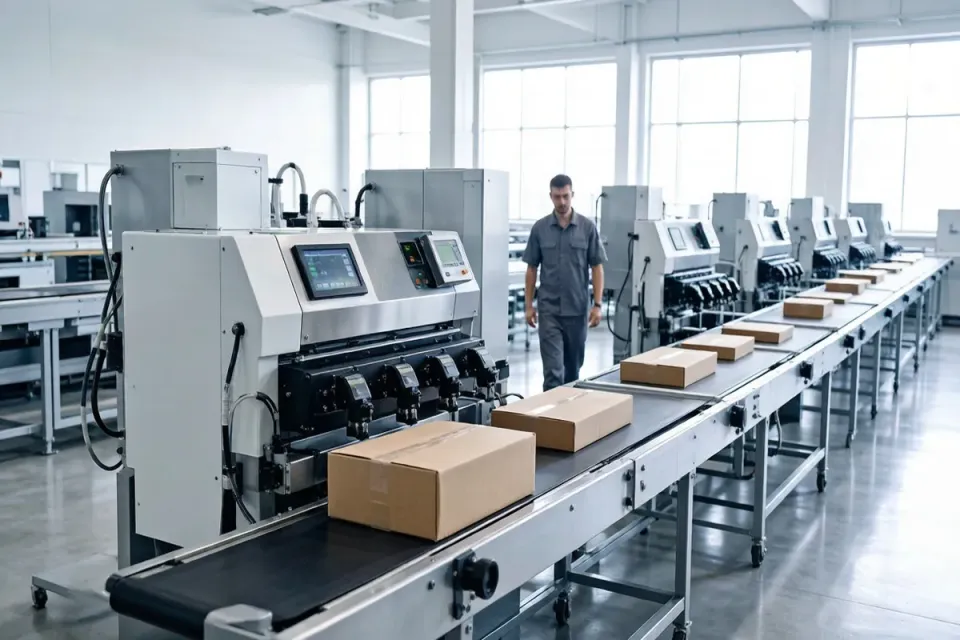
Summary: An industrial inkjet coder is judged by running cost, not purchase price. This article breaks down where ink, solvent and chip spend actually goes, explains why older workhorse models stay in service, and lists the three things to verify in writing before moving a coder onto a compatible consumable program.
Search data out of German-speaking markets keeps returning the same phrase in different spellings: industrial inkjet coder. The people typing it are usually not shopping for a machine at all. They already run one, and they are working out what it costs to keep it alive.
What the Term Actually Covers
An industrial inkjet coder is a continuous inkjet machine built for production lines, not an office printer with a bigger case. It prints date codes, batch numbers and lot marks directly onto moving product without contact. That distinction matters because almost every cost question downstream — ink, solvent, chips, service intervals — follows from the machine class rather than the brand on the front.
Consumables Decide the Running Cost
Nobody buys a coder for its purchase price. The line manager's real number is cost per thousand codes, and that is dominated by ink, make-up solvent and the chips that authorise each cartridge. It is worth breaking that number down before signing any supply agreement, because a machine that looks cheap at quotation can be the expensive one by month six.
Why Older Models Stay in Service
Workhorse models from earlier generations, the kind still found listed as the 1505 or the 405, keep running for years in smaller plants. The reason is rarely sentiment. It is that the mechanical parts are serviceable and the consumable is available. When a plant tells us a machine is obsolete, the question we ask is not what year it was built. It is whether a qualified chip and ink supply still exists for it.
Multi-Language Signals Point to Distribution
Search behaviour in these markets shows a second pattern. Queries arrive in German, Spanish and English from the same accounts, which usually means a distributor or a group purchasing office covering several countries. That changes what a supplier needs to provide: consistent part numbers, documentation in more than one language, and a single point of contact rather than per-country resellers.
What to Verify Before Switching Supply
Before moving a coder onto a compatible consumable program, verify three things. That the chip matches the printer generation in front of you. That the supplier can state the batch behind each part. And that the replenishment interval holds up during a busy quarter, not just in a quiet month. Get those three answers in writing and the switch stops being a gamble.
For more on CIJ TIJ consumables and compatible chips, browse our industry insights.
Related products:
related news


E-mail address:
Hotline:
All referenced brand names including Linx, Imaje, Domino, VJ are used solely for illustrating product compatibility scope.
Topmark has no affiliation, authorization, partnership or official endorsement with any industrial printer manufacturers.
All products offered by Topmark are third-party compatible consumables, not genuine original OEM spare parts.
No trademark ownership is claimed for any trademarks mentioned herein.